All-American Halftime Show: A Patriotic Alternative on Super Bowl Night 🇺🇸 – nganha
When Patriotism Takes the Stage: The Halftime Show America Didn’t Expect
On Super Bowl night, when millions usually pause for glittering pop spectacle, a parallel stage quietly promises a very different vision of American identity and cultural celebration.
The All-American Halftime Show positions itself not as a competitor in ratings, but as a symbolic counterweight to mainstream entertainment dominating the nation’s most-watched broadcast.
Presented by Turning Point USA, the event frames itself as patriotic, family-friendly, and rooted in faith, family, and freedom rather than shock value or celebrity provocation.
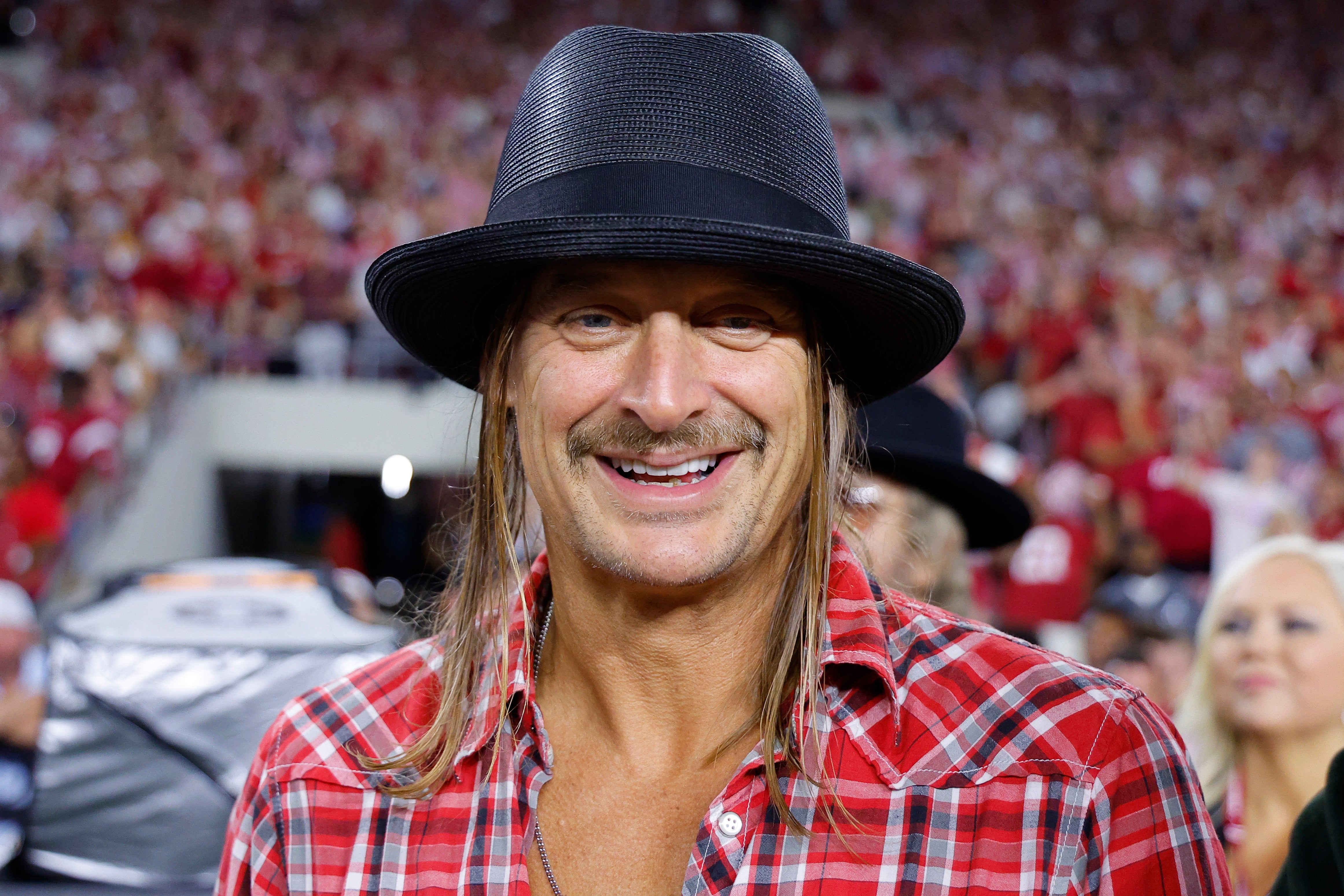
By streaming during the Super Bowl LX halftime window, the show deliberately enters one of America’s most emotionally charged media moments.
This timing alone transforms the program from a simple concert into a cultural statement that invites admiration, skepticism, and fierce debate across social media platforms.
Supporters argue that the All-American Halftime Show fills a void left by years of increasingly polarizing halftime performances.
They believe mainstream entertainment has drifted away from traditional values, leaving many viewers feeling unrepresented during national cultural moments.
For these audiences, country and rock artists singing about unity, belief, and national pride feel less like nostalgia and more like reclamation.
Critics, however, see the project as overtly political branding disguised as wholesome entertainment.
They argue that aligning patriotism with a single ideological framework risks excluding Americans who define national pride differently.
To them, the phrase “family-friendly alternative” reads as a subtle indictment of modern culture rather than an inclusive invitation.
The controversy intensifies because the Super Bowl itself has long functioned as a shared civic ritual.
For decades, it blurred lines between sports, pop culture, and national identity, creating moments remembered regardless of political affiliation.
Introducing a parallel halftime experience challenges the assumption that America still consumes culture together.
Instead, the All-American Halftime Show reflects a fractured media landscape where audiences increasingly curate values, not just content.
Streaming technology allows viewers to opt out of what feels uncomfortable and into spaces that affirm their beliefs.
This shift raises a difficult question about unity in an age of endless alternatives.
Is offering another option a healthy expression of pluralism, or a symptom of deeper cultural fragmentation?
The answer depends largely on whether one sees shared discomfort as necessary for dialogue or harmful to social cohesion.
Turning Point USA’s involvement adds another layer of intensity to the discussion.
Known for its outspoken political activism, the organization brings both a loyal following and fierce opposition wherever it appears.
Its supporters view the halftime show as cultural participation, not political intrusion.
Opponents counter that any event curated by an ideological group inevitably carries an agenda, regardless of musical genre or lyrical tone.
They worry about normalizing parallel realities where entertainment becomes another front in cultural warfare.
Yet the artists themselves complicate this narrative.
Country and rock musicians often emphasize storytelling, personal belief, and emotional connection rather than policy or party lines.

Their presence suggests the show aims to resonate emotionally before intellectually.
Music has always been a vehicle for identity, memory, and belonging.
From protest anthems to patriotic hymns, songs often outlast speeches in shaping collective feeling.
The All-American Halftime Show taps into this power deliberately and unapologetically.
Social media reaction is almost guaranteed to be explosive.
Supporters will likely amplify clips as proof that “real America” still has a voice.
Critics may share the same clips as evidence of cultural regression or ideological posturing.
Algorithms thrive on exactly this kind of emotional polarity.

Content that sparks pride, anger, or moral certainty spreads faster than nuance or cautious reflection.
In that sense, the show is perfectly engineered for virality.
What makes this moment especially potent is the contrast with the NFL’s official halftime performance.
The league’s show often emphasizes global stardom, spectacle, and broad market appeal.
The alternative emphasizes roots, values, and a distinctly American narrative.
Neither approach is inherently neutral.
Each reflects assumptions about what audiences want, what America represents, and whose stories deserve the biggest stages.
The coexistence of both highlights unresolved tensions within popular culture.
Some viewers will feel relieved to have a choice that aligns with their values without apology.
Others will feel uneasy about entertainment becoming so explicitly divided along ideological lines.
Both reactions are valid and revealing.
Historically, moments of cultural division often precede periods of renegotiation and change.
Art and entertainment act as early warning systems, signaling shifts long before legislation or elections.

The All-American Halftime Show may be one such signal.
It suggests a growing appetite for media that affirms identity rather than challenges it.
Whether this trend strengthens communities or hardens divisions remains an open question.
What cannot be denied is the show’s strategic brilliance.
By choosing Super Bowl night, it guarantees relevance without needing NFL endorsement.
Attention, not approval, is the real currency of modern culture.
Families watching together may appreciate content designed to be accessible across generations.
Parents tired of explaining provocative imagery might welcome an experience framed as safe and affirming.
This practical appeal should not be underestimated.
At the same time, younger audiences raised on boundary-pushing performances may dismiss the alternative as dull or preachy.
Taste, like politics, is deeply personal and often generational.
The clash of reactions reveals as much about viewers as about the show itself.
Ultimately, the All-American Halftime Show forces a conversation many would prefer to avoid.
It asks whether national celebrations should reflect a single mainstream culture or accommodate divergent visions.

It asks who decides what “family-friendly” really means in a diverse society.
It also asks whether opting out is a form of protest or simply personal preference.
In a fragmented media world, silence can be as loud as criticism.
Choosing one stream over another becomes a subtle act of self-definition.
As the music plays and social feeds light up, the real performance may happen online.
Posts, comments, and shares will extend the halftime moment far beyond fifteen minutes.
Debate will linger long after the final note fades.
Whether praised as refreshing or condemned as divisive, the All-American Halftime Show is unlikely to be ignored.
In an era where attention equals influence, that alone ensures its cultural impact.
America may not be watching the same stage anymore, but it is still watching each other.