Today I have a very special bonus story for you, free for everyone to enjoy.
I recently caught up with Susannah Harker, who played Jane Bennet in the BBC’s iconic 1995 Pride and Prejudice, still so many people’s favourite Austen adaptation more than 30 years on. Susannah is also a dear friend and an Ambassador for the Jane Austen Literacy Foundation. Her family connection to Austen runs remarkably deep, as you’ll discover.

Susannah has written a film, Jane Bennet’s Second Spring: a coming-of-age comedy-drama about midlife, drawn from her own experience of carrying “the good girl” with her long after the cameras stopped rolling, and with a little help from Jane Austen herself. Last year, a first Kickstarter campaign raised the money to develop the script, which is now complete. Susannah is now raising funds for the next step, a teaser for the film, and there are only a few days left to support it.
We talked about her memories of the 1995 shoot, the wonderful people she worked with, and the story behind her new film.
A small note before we begin. To me, Jane Austen has always simply been “Jane”. But with Jane Bennet in the conversation too, I occasionally call my fifth great-aunt “Austen”. I hope she’ll forgive the formality, just this once.
Caroline: We’ve known each other for over a decade now, and met up this summer at Chawton House, as we do most years, but the last time we talked at length about your work was in Baltimore last year, at JASNA.
Susannah: Over a year now, isn’t it? That’s right, we were both in Baltimore. I was invited by JASNA, the Jane Austen Society of North America.

Author Susan Moore, Susannah and me at Chawton House, on a very hot day in July 2026
Caroline: It was a wonderful event, and such a pleasure to celebrate the 250th anniversary of Jane Austen’s birth with the largest Jane Austen society in the world. Didn’t we have an amazing reception?
Susannah: Yes! Hello to all those lovely people. They were amazing, and they all turned out dressed to the nines. It was my first experience of a big conference like that, and there was a wonderful energy. I’ve had conversations like this on many occasions, but it was altogether different to step on stage in front of an audience of 800-plus people.
Caroline: It was my first JASNA conference too, and it was wonderful to see everyone’s reactions when Gabrielle Malcolm interviewed you live on stage. They were with you every step of the way. You talked about your memories of the Pride and Prejudice shoot, and that means so much to people. What was it like to get up every day and spend time in hair, make-up and wardrobe to become Jane Bennet?
Susannah: I’ll go back further in time, to Acton. It was 1994, and we were all shipped out to Acton for rehearsals. That’s my earliest memory: a very modern set of rehearsal rooms on the outskirts of London, a far cry from the bucolic English countryside we were to film in.
We were all sitting around in this vast room in our modern clothes, and I remember Alison Steadman giving an amazing full performance already. I felt sort of daunted and shy at the prospect of following her, which wasn’t a bad thing to feel, as I was playing Jane Bennet. All read-throughs are daunting, but I remember it as a splendid one. I looked round and was very taken by the sight of all these extraordinary actors, so well cast, and the vibe of it was present even then.
It became clear that what Andrew Davies had done was bring new elements out of the book: the scenes with Darcy, and of course the dive into the lake that became iconic!
Caroline: I remember Andrew Davies saying in interviews that he wanted to “flesh out” the male characters.
Susannah: Yes! Talking to Andrew, as I have quite a few times since, he was very interested in the male perspective. You have that extraordinary shot of Darcy and Bingley on horseback at the very top of episode one. The other thing Andrew was determined to do was take the story out of the drawing room and into nature and wildness. That was perfectly illustrated by Darcy diving into the lake, and that erotically charged moment when he comes out. That charge is present in the novel anyway. I remember reading the script for the first time and thinking: what he’s done is bring everything that’s underneath to the surface, and realise it in such a spectacularly visceral way. Very Andrew.
I had been in the original House of Cards, which he also wrote, and I recognised his theatrical sense of what works and of taking things to extremes. He took the novel as a jumping-off point and brought out the subtext: what was simmering beneath the surface for some of the characters. But not for Jane Bennet. Jane maintained her Georgian poise, her grace.
For a long time, I was concerned.
Caroline: About what?
Susannah: I had to square things with myself, because I thought, I need a bit of an edge. I’m playing Jane Bennet; is she boring? It wasn’t until years later that someone pointed out how her grace and strength showed an innate quality: the power simply to turn away, and to accept.

Caroline: I’ve always thought of Jane Bennet as a fixed point in the novel, of fidelity and loyalty. Rather like Fanny Price and Elinor Dashwood, a necessary person in the family make-up.
Susannah: Someone who carries a lot of the emotional burden in the family, as Cassandra Austen no doubt did. Jane Bennet is often said to be based most closely on Cassandra and her relationship with Jane.
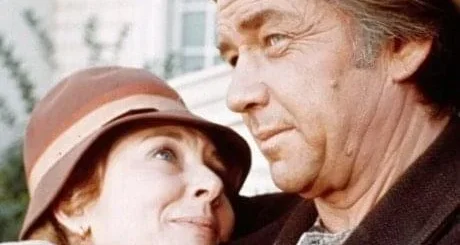
Caroline: And, of course, your lovely mother, Polly Adams, also played Jane Bennet for the BBC.
Susannah: Yes, in 1967, with Michael Gough as Mr Bennet and Celia Bannerman as Lizzy. It was a very different sort of production from 1995, in the BBC tradition of the time. They filmed Sense and Sensibility and Emma around then too, on studio sets of drawing rooms that were sometimes a bit wobbly!
Crucially, that version cut an entire character. There was no Mary Bennet! Shocking, really, and inconceivable now, especially after the wonderful drama of The Other Bennet Sister. How could they? Why Mary?
Caroline: Poor Mary! They didn’t want her in the 1960s. It’s interesting, isn’t it, that there has since been a kind of renaissance in the way Austen’s work is treated?
Susannah: And Andrew Davies was very much part of that renaissance: breaking out of the drawing room and putting the characters into the real world, which helped them connect with the audience. It gave more insight into Austen’s wonderful characters. Jane can be seen as a counterpoint to Mrs Bennet and the more chaotic characters, part of Austen’s innate instinct for balance.
It also meant that in preparing for the filming, we were immersed in movement and dance, to really learn the Georgian way of being. We had extraordinary dance rehearsals, classes really, with Jane Gibson, the choreographer. She was brilliant, but very strict! She stood there with a staff, banging out the rhythm, like a proper Regency dance teacher. It was really nerve-wracking, and from the word go Crispin [Bonham-Carter] and I were giggling and being told off for it. We were being schooled like kids.
It gave us a tremendous sense of the period, which was vital for the production. It gives you a sort of shorthand to the way people moved in that period and how they were with each other. I think that’s probably why people go back to it today.
And then we were off to the locations around England. Longbourn first of all.
Caroline: Luckington Court, near Chippenham in Wiltshire.
Susannah: Yes! I think we covered all the shires in England.
Caroline: And Netherfield was Edgcote House in Northamptonshire, with the interiors for the Netherfield ball shot at Brocket Hall in Hertfordshire.
Susannah: It was so wonderful. I remember stepping onto the set and feeling the thrill, as you do with any filming, of what’s been in your head being realised, and realised so beautifully. Everything on that production was so accurate and finely worked: the set design, the costumes, the feel of the different fabrics, the muslin, the detail of the fit and the trim.
I particularly remember a scene with Jennifer [Ehle] where I had to arrange dried flowers, lavender I think, as we spoke. Everything was so perfectly realised as it would have been at the time, and the lighting so atmospheric, that it made our job so much easier.
Caroline: People love to recreate those experiences now, don’t they? Dressing up, visiting historic houses, walking in Jane’s footsteps and finding the filming locations.
Susannah: They do, and that’s one of the things about storytelling that unites us all: the appeal to the imagination. Getting dressed up is one of the big motivations for being an actor. We all have a need for play, and for realising story through action and costume. So it unites us with all the people out there making muslin gowns and doing the embroidery. As actors we occasionally get the chance to step onto a set and believe in that world as a truth, so I totally understand why people want to go out, re-enact and get dressed up. I totally get that.
Caroline: There was clearly a lot of fun and camaraderie on set. How much did the director, Simon Langton, have to do with that? He was so experienced in classic drama on British television. As you know, Simon was the first Ambassador for the Jane Austen Literacy Foundation, and he’s the person who persuaded me to write my memoir, Jane & Me: My Austen Heritage, back in 2014. He’s such a lovely man. How much did he influence the culture on set?
Susannah: Simon Langton has such grace and charm; he is the epitome of Englishness. He wasn’t a pushy or dictatorial director by any means. He allowed it all to happen, and he held the centre for everyone.
Sue Birtwistle, the producer, was extraordinary. She was present every single day, with incredible experience behind her and a deep commitment to the project. I believe it was really down to Sue that the whole thing happened at all. It was her brainchild.

Simon and Sue were a great partnership. Simon was such a benign presence on set, and he absolutely understood Englishness, which I think is why the production portrays the Englishness of Austen’s work so effectively.
The fact that it was a series was also a real advantage. In a film, scenes and characters have to be cut, whereas we could take the time Austen takes for each romance to unfold, and go at her pace. Hopefully that will be the case for the new Netflix series too.
Caroline: That’s out in December, just in time for Christmas! I’ve just recorded a conversation with Rufus Sewell, who plays Mr Bennet, and I can’t wait to see it.
Susannah: Very exciting! I think it will be fantastic. Rufus is a wonderful actor, and I was at drama school with him. And Olivia Colman will be wonderful. It sounds as if it’s been cast really well. A new Austen for a new generation.
Caroline: It will be very interesting to see how they portray the different sisters. Austen famously gives very little physical description of her characters and how they move. There are clues, but how did you approach Jane Bennet with so little to go on?
Susannah: That’s a great question! I found a key word that helped me find Jane, and that was “serene”. Her serenity was at the heart of her interactions. The costume and hair gave her a Grecian, neo-classical profile; her line was long and elegant, which really helped me achieve the grace and serenity she required.
There isn’t much else written about Jane Bennet in the book. That’s one of Austen’s extraordinary skills: she nails a character without giving you eye colour or hair colour, and yet somehow we can all see them.
There’s also a description of her running, but much more slowly than Lizzy, because Lizzy is so vital. So I tried to channel something of the character through running slowly, and that’s about all the information I had to work with!
The thing about Jane is that she’s a really good girl, through and through. Those characters can sometimes be quite boring, but not when Jane Austen writes them, because she balances them so perfectly with the other characters, and writes them with such intelligence that you know there’s depth to this good person. I think Jane Bennet is the peacekeeper in the family, because all the others are fairly volatile in different ways, and it naturally falls to her. So it’s interesting, isn’t it, that she goes off and becomes really ill? I’ve often wondered about that.
Caroline: That the emotional labour of being the peacemaker wore her out?
Susannah: Yes, maybe. I’d never thought of that before. It just popped into my head! Austen was so good at observing women’s labour and struggle, women as peacemakers and communicators. She had an innate understanding of the pressures of being a woman.
That reminds me: my grandmother was a huge fan of Pride and Prejudice. I remember seeing her, when I was a child, walking across the living room holding the book close to her heart. She would go back to it whenever she was stressed or worried. That memory is burnt into my consciousness. But I didn’t read it myself until many years later, just before we started filming.
So I read Austen in my twenties, just as I was about to become a mother. I was four months pregnant with my son by the end of the shoot, and very exhausted! Now my son, Finley Glen, is a father for the first time, and I’m a grandmother!
Caroline: Congratulations!
Susannah: And Finley is a theatre director, now working on Pride and Prejudice himself: Pride and Prejudice* (*Sort Of), a comedy spoof that started on the Edinburgh Fringe and is now touring. People go to see it again and again.
Caroline: I’ve met a few members of your family, as you have mine, and it warms my heart. Our connections are very different, but I know what it’s like to belong to a family whose story is woven through with Jane’s, across the generations. And yours has links to both Janes!
Susannah: And my other family connection with Austen goes way back. My father, Richard Owens, played Colonel Brandon in the BBC’s Sense and Sensibility in 1971, with Joanna David, who of course played Mrs Gardiner in 1995. I have a wonderful print by Charles Node, the designer on that production and a great friend of the family, and some wonderful costume sketches, including one of my father.
I was reunited with Joanna last year at Winchester Cathedral, for the unveiling of the statue of Jane Austen. We gave readings there, with Adrian [Lukis], for the 250th anniversary.
Caroline: It wasn’t planned that way at the time, but it has turned out to be such a fitting honour for Jane Austen, the great writer and daughter of a clergyman, to rest in the cathedral of her beloved Hampshire. It’s a place where people can go to pay their respects.
Susannah: Yes, it’s very befitting that Jane lies there.
Caroline: And now you’re channelling life and fiction into your own writing, with Jane Bennet’s Second Spring.

Susannah: Jane Bennet’s Second Spring is a meta piece, with roots in my own real-life experience. I played Jane Bennet, the good girl, and that has travelled with me across my career. So the film is about what happens when you reach midlife and the good girl is left behind. People perceive you as you were when you were young for the rest of your life, so it’s about ageing, how we come to terms with it, how we leave our youth behind and navigate midlife and beyond.
I was very visible as a young actor and much less visible as an older one. So I’m using the example of having played the perfect, archetypal girl to explore becoming a real woman. There’s lots of existential angst, and things going wrong in life, and I hope to show what it’s like to be perceived as a perfect, graceful creature when the reality is quite different.
You have to grow up and grow away from being the perfect girl, or from being told we have to be perfect and graceful and charming, into becoming a full-blooded, real woman who deals with things going wrong. That’s what I wanted to explore. I’ve also explored the menopause, and what it’s like to reach midlife with a sense of losing one’s youth, and not necessarily knowing how to age gracefully.
As women we’re so often given negative reflection. The parts I was being offered were all cross matrons and dowagers. They can be great parts, but it was very early, when I was only 50. The interesting, vibrant parts had gone, while men were still getting them, and still are, well into their sixties. As female actors we tend to become the characters who observe others, on the margins of the central characters’ world, as mothers or aunts. We’re so rarely put centre stage. That’s what I wanted to write about.

Caroline: And Austen is such a wonderful foundation for that, because she put women and their lives at the centre, at different ages and in different phases of life, didn’t she?
Susannah: Indeed. I was very aware of Jane Austen’s feminist status, and how useful that would be. I hope writing about female issues makes for a feminist subject: how they make women feel, and trying to redress the balance and give us some agency. That’s certainly what Austen did with her characters. She gave them a voice, and hope. I’m hoping people will recognise and relate to what I’m writing about, and use it to explore their own feelings around menopause, midlife and beyond, and perhaps as a way to move forward, which is what I did.
Acting in and reading Austen, and meeting the wonderful Austen fan base, was very much part of how I navigated midlife in a healthy way. There’s a wholesomeness to the Austen community, and a desire to disappear into the Austen world, that is very soothing and very healing. Really, it’s a kind of magical realism, and that’s what I came to explore in my work, alongside something very grounded in the mundanity of daily life. I can’t say too much, other than that Jane Austen does make an appearance. I won’t say how, but she’s a kind of life coach!
Caroline: For so many readers, the comfort and healing Austen’s novels offer is a big part of why they love them.
Susannah: It’s incredible how nourishing they can be, so uplifting for mental wellbeing. Something I hear over and over again is that families go back to watching Pride and Prejudice to help them through difficult times, because it lifts them out of dark places. I’ve heard it all over the world, in America and here. Fans have come up to me to tell me what the novel and the series mean to them. It’s extraordinary, the healing power of her work.
That features in Jane Bennet’s Second Spring too. There are three fan characters, each very different, who provide some comic relief and satire, and they’re based on real people, actually!
Thanks to everyone who supported our first Kickstarter last year, the script is now in good, finished form, and we’re raising money for a teaser: a short film for festivals that will give a strong feel of the finished product. It will help us get into talks with investors, secure the right director and attract the actors we want to cast. It’s also proof of concept. We do have some big streaming platforms interested, and the next step is to show them what we’ve got! And as a taste of things to come, I hope it will be of great interest to fans worldwide.
Caroline: You have wonderful support behind this film, particularly from the 1995 family. Are you still in touch with many of the cast?
Susannah: I was recently at the Savile Club in London, a very English setting, for Andrew Davies’ 90th birthday celebration and the launch of his new book. It was so wonderful to see him, and Alison Steadman was there. She’s like a version of my mum. It feels like a thread that never breaks; we all feel very connected through it. I also saw [director] Richard Eyre, who is married to Sue Birtwistle.
I miss people like Ben [Whitrow] terribly. I saw him at a few events, at Chawton for example, and at the 20th anniversary of Pride and Prejudice in 2015. I have some lovely photographs of Crispin and me with Ben. I’m meeting Crispin for coffee soon; we often catch up.

Caroline: Simon Langton was at that anniversary event too, wasn’t he? I’ve heard that when the audience asked Ben why Pride and Prejudice works so well, he simply said that Jane Austen was a genius!
Susannah: Yes, that’s right. It is genius material, and it was fully realised and expanded through Andrew’s lens. He realised the full theatrical impact of the drama in it.
Caroline: And Andrew is still going at 90! He’s unstoppable!
Susannah: I know! He has such extraordinary, sparkling, twinkling energy.
That reminds me of another thing about the shoot: when Julia [Sawalha] arrived. She joined later because she’d just come off filming Absolutely Fabulous, and she turned up, this raucous, Lydia-like character with a great big dirty laugh. We’d been doing all this quiet stuff with the dried flowers and long passages of talking and along came this really earthy girl.
Suddenly we were all sitting around doing the family tea and dinner scenes, and there was Lydia, and the whole tone changed. Jennifer was exhausted because she was working all the time, I was pregnant, Lucy [Briers] was being wonderfully Mary, and suddenly there was this explosion of humour and laughter. We needed so many takes to get those scenes together once Julia had arrived!
Another time I completely lost it was in a ball scene, when I heard one extra say to another, “Can I press you to a tart?” I’ve never forgotten it. I still use it.
Caroline: Simon told me over lunch one day that he wasn’t totally convinced by the casting of Colin Firth as Darcy.
Susannah: Yes, he very much felt Darcy needed to be dark and brooding, and Colin was ginger, so they transformed him into dark and brooding! I believe in the new one they have a ginger Darcy, which I think is fantastic, because I now have a ginger grandchild and daughter-in-law, and it’s very fashionable to be a redhead now. I love it.
I think it’s brilliant that casting has become more diverse and adventurous; future adaptations are going to be fascinating because of it. I can’t wait to see the new generation of Pride and Prejudice. Like Shakespeare, Austen’s work is very malleable. Because her writing is so good, you can give it all sorts of interpretations and spins, and it still holds its integrity. The story and the characters still shine through, whatever you do with it. That’s a testament to the quality of Jane Austen’s writing.
Caroline: So what made Colin the right Darcy after all?
Susannah: He played the character so cleverly. When Bingley and Darcy first appear on horseback overlooking Netherfield, Colin apparently insisted that the camera not be on him, but keep him at a distance, behind Crispin. He knew that was the most powerful entrance for Darcy, because, as in the book, it’s a slow burn. We grow to fall in love with Darcy and come into close-up with him as the story unfolds. That was such a brilliant, thoughtful actor’s idea. I just love that story.
Caroline: And we saw that same thoughtfulness in your Jane Bennet. Thank you so much for taking the time to talk, Susannah, I’ll see you in Chawton next year.
If this conversation has brought back happy memories of 1995, or if, like so many of us, you have found comfort in Jane’s world through the harder seasons of life, I hope you’ll help Susannah bring Jane Bennet’s Second Spring to the screen. Every pledge, however small, helps make the teaser happen, and the campaign closes on Monday 19th October.