Ballots from the previous night’s election lay on tables in homes across town, confirming once again that Jose “Joe” Ceballos, the familiar face who had become a symbol of stability and civic pride, would serve another term as mayor.
Families, neighbors, and longtime residents had gone to bed thinking everything was as it should be — but in less than 24 hours, that certainty evaporated.
The news hit like a thunderclap.
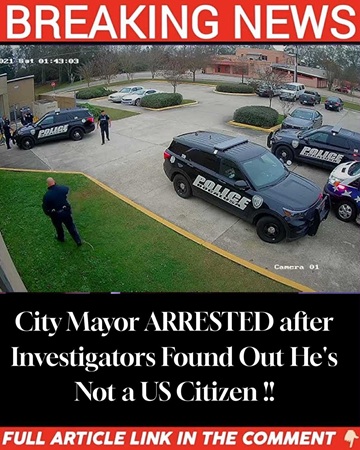
Jose Ceballos, the mayor whose handshake was warm, whose wave was familiar, whose voice had guided town meetings with reassuring authority, now faced felony charges that threatened to dismantle the very trust upon which the community relied.
State authorities, including Kansas Attorney General Kris Kobach and Secretary of State Scott Schwab, announced that Ceballos had never been eligible to vote — because he is not a U.S. citizen, but a permanent resident.
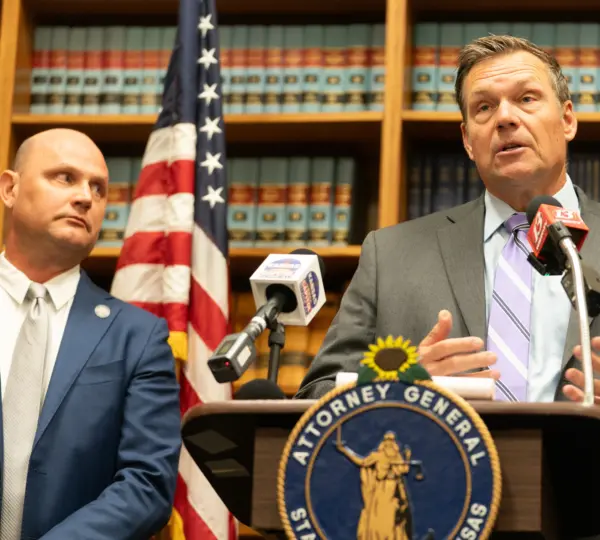
Under Kansas law, that fact alone meant he lacked the right not only to cast ballots, but also to hold public office.
Court documents allege that over the past three years, Ceballos repeatedly cast votes in the 2022, 2023, and 2024 elections.
Even more shocking: he ran for office and won while legally ineligible.
The charges now include three counts of voting without being qualified and three counts of election perjury — felony offenses that could carry more than five years in prison, in addition to substantial fines.
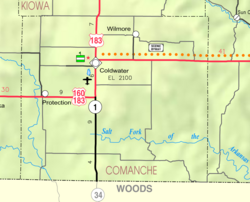
For the residents of Coldwater, the shock quickly turned into disbelief and anger.
Those who had once greeted Ceballos warmly on the streets now whispered behind closed doors, exchanging worried glances and the same haunting question:
How could this have happened? How long has it been going on?
City officials scrambled, calling emergency meetings to ensure essential services continued uninterrupted.
But the true challenge is far greater than logistics: it is about healing the community’s sense of safety, identity, and trust.
That bond — the invisible contract between citizen and elected official — feels shattered.
The emotional ripple extends beyond ballot boxes and council chambers. Parents whisper warnings to their children about civic responsibility.
Community groups, churches, and civic associations hold meetings not for celebration, but for reassurance — struggling to answer questions they themselves cannot yet fully understand.
Questions hang over the town like storm clouds ready to break: Who can lead now?
Can Coldwater restore faith in its elections, its governance, and itself?
Legal proceedings and potential immigration actions loom, adding a layer of uncertainty that no amount of emergency meetings can entirely resolve.

Residents are not only processing a legal crisis; they are grappling with a crisis of identity.
That sense of security, now fractured, cannot be repaired by bureaucratic statements alone.
This is about more than a single man’s fate. It is about the soul of a town, the collective consciousness of neighbors who relied on one another and their leaders without hesitation.
Can a small town, whose identity was intertwined with the familiar face of its mayor, survive when the very foundation of its civic life feels shaken?
Courtrooms may be crowded, hearings may drag on, and appeals could stretch timelines even further.
Healing will not be measured solely in convictions or legal outcomes, but in restored confidence, regained trust, and the renewed belief that the civic system serves the people, not just its officials.
They must also look forward, questioning how to strengthen election oversight, ensure eligibility verification, and protect the democratic process.
The task is as much about safeguarding hearts as it is about enforcing laws.
Coldwater’s story is a stark reminder that democracy depends not only on statutes and ballots, but also on character, integrity, and accountability
. It is a story of how trust, once broken, affects more than governance — it affects every neighbor, every friendship, and every belief in shared purpose.
In the weeks ahead, the town must wrestle with its pain, restore its confidence, and prove that even when shaken to the core, a community can rebuild, renew, and reclaim the faith that once bound it together.